
PivinFamily20240306 - Person Sheet
PivinFamily20240306 - Person Sheet
NameNicolas MARSOLET 

Birthabt 1601, France
FatherNicolas MARSOLET (~1561-1608)
MotherMarguerite DE PLANES
Misc. Notes
Sieur de St-Aignan
Came to Québec with Champlain in 1613.
truchement (interpreter) des Montagnais et Algonquin.
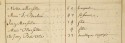
1666 Census of New France, Québec City, page 17:
Nicolas Marsollet ...........................65 bourgeois
Marie Le Barbier ............................47 sa femme
Jean Marsollet ..............................14 fils
Marie Marsollet ..............................4 fille
Et Jean Belleville ..........................22 domestique engaigé
From: http://www.biographi.ca/en/bio/marsolet_de_saint_aignan_nicolas_1E.html
MARSOLET DE SAINT-AIGNAN, NICOLAS, interpreter, clerk in the fur trade, ship’s master, trader, and seigneur, coming from the neighbourhood of Rouen – perhaps from Saint-Aignan-sur-Ry, as his name suggests; b. 1587, if the burial certificate is to be believed, or 1601, according to the 1666 census; d. 15 May 1677 at Québec.
Historians do not agree as to the date of Marsolet’s arrival in New France: some favour 1608, others 1613 or 1618. The only affirmation that is at all explicit comes from Champlain; recounting the events of 1629, he wrote of Pierre Raye, Étienne Brulé, and Marsolet that he had taken them “upon our expeditions over fifteen or sixteen years before.” Now we know that Champlain had in fact left France in 1613 for a sixth stay in Canada, during which time he went up the Ottawa River as far as Allumette Island in the Algonkin country. In our opinion it was in this year that Marsolet, a future interpreter of the Montagnais and Algonkin languages, landed in the colony, together with the founder of Québec.
In Marsolet’s long career two periods are distinguishable, during which he adopted in turn each of the two conceptions of colonization whose partisans were at variance in New France. On the one hand the merchants and their clerks, concerned solely with furs and wealth, were opposed to the establishment of a French population; on the other hand Champlain and his associates were struggling to populate the colony and preach the gospel to the Indians. Until about 1636 Marsolet seems to have supported the merchants; subsequently he went over to the other camp.
Little information prior to 1629 is available in respect to Marsolet. In 1623 and 1624 his presence at Tadoussac was noted; on 24 March 1627 he was in Paris; in the summer of 1627 he was back in Canada and took part in fur-trading at Cap-de-la-Victoire. Finally, the “interpreter” who spent the winter of 1625–26 with the Jesuits of Québec while incapacitated by pleurisy and who agreed to impart his linguistic knowledge to Father Charles Lalemant, was perhaps Marsolet.
From the moment he reached New France, Marsolet probably divided his activities between the posts at Tadoussac, Québec, Trois-Rivières, and the Algonkin villages of the Ottawa River region, living with the Indians in the greatest licence and continually on the look-out for substantial profits. This at least is what Champlain hinted at in 1629, when he accused Marsolet and Brûlé of remaining “without religion, eating meat on Friday and Saturday,” of indulging themselves “in unrestrained debauchery and libertinism,” and especially of having “betrayed their King and sold their country” for love of money, by putting themselves at the disposal of the English when Québec was taken by the Kirke brothers.
Champlain had another reason to complain of Marsolet. The interpreter wrecked his plan to take back to France Charité and Espérance, two Indian girls whom the founder of Québec had adopted. Perhaps with the intention of keeping the young girls near him, because, as Champlain wrote, he “wished to debauch” them, or in order to punish Espérance for having repulsed his advances, the “rascal” misled Kirke – who was very anxious to keep the Indians’ goodwill – into thinking that they would look with disapproval upon the girls’ departure. Despite Champlain’s indignant denials and his offer to appease the Indians by a valuable gift, David Kirke did not authorize him to take his two protégées with him. Champlain and Espérance heaped bitter reproaches upon Marsolet for such double-dealing.
At the end of the summer of 1629 the majority of the French sailed for France. Marsolet remained behind. He continued to carry on his occupation as an interpreter, for the benefit of the English. In 1632 the French returned, and again Marsolet changed his allegiance, although not entirely his attitude. The Jesuit Paul Le Jeune wrote in 1633: “ In all the years that we have been in this country no one has ever been able to learn anything from the interpreter named Marsolet, who, for excuse, said that he had sworn that he would never teach the Savage tongue to anyone whomsoever.” Only “Father Charles Lallemant won him.” Nicolas Marsolet was still harbouring the inveterate distrust felt by the majority of the fur-traders towards the missionaries and the settlers, for they dreaded their influence over the Indians who supplied the fur trade.
Nevertheless, the interpreter was soon to abandon his prejudices. By about 1636 there seemed to be no possibility that the movement towards populating and evangelizing the country would be checked, although it was still only at its beginning. Marsolet sided with the general opinion and resolved to settle down. In 1636 or 1637 (we know the first child was baptized on 22 Feb. 1638) he married Marie Le Barbier, and on 6 Oct. 1637 took possession of the seigneury of Bellechasse (Berthier). This seigneury, with a frontage of a quarter of a league and a depth of one and a half leagues, had been granted to him by the Cent-Associés on the preceding 28 March; three years later, on 20 Nov. 1640, he bought from René Maheu a tract of land on the Sainte-Geneviève hill. From then on Marsolet lived a steady life. In 1643, for example, the Relation spoke of him as a valued collaborator of the missionaries.
Thanks to his long experience of Indian questions and of the fur trade, Marsolet obtained a post as clerk to the Cent-Associés about 1642; but while he continued to act as an interpreter, an occupation which he never abandoned, he soon began to traffic on his own account. Marsolet was on bad terms with the directors of the Communauté des Habitants; he disapproved of their luxurious living; and after inciting a movement of protest against them in January 1646, which was swiftly suppressed by the governor, he had to rely on his own resources to carry through his commercial undertakings. By 1647 at the latest he was the owner of a boat which he utilized in his fur-trading trips to Tadoussac. Later, about 1660, he appears to have operated a shop at. Québec: in December 1664, for instance, he was accused of retailing wine at 25 sols a jug, despite the rulings of the council. In 1663 he was one of the 17 settlers to whom the governor Pierre Dubois Davaugour, on March 4, had rented the Tadoussac trading concession for two years; this lease, however, was judged irregular and annulled shortly afterwards by the Conseil Souverain.
The “little king of Tadoussac,” totally engrossed in the fur trade, took scant interest – perhaps for lack of capital – in exploiting the numerous grants of land that had been made to him. After the Bellechasse seigneury which he made over to M. Berthier* on 15 Nov. 1672, Marsolet had received the following: from Abbé La Ferté on 5 April 1644 the Marsolet meadows, an arriere-fief with a frontage of half a league and a depth of two leagues, in the Cap-de-la-Madeleine seigneury; from the Compagnie de la Nouvelle-France on 16 April 1647 an equal area of land, in part of the future Gentilly seigneury, which he sold to Michel Pelletier de La Prade on 23 Oct. 1671; and from Jean Talon on 3 Nov. 1672 the Marsolet fief, half a league long and one and a half leagues wide, in the future Lotbinière seigneury. None of these fiefs was lived on or cleared by Marsolet’s efforts. In the censive (seigneurial area) of Québec Marsolet owned two other estates: 71 acres on the Sainte-Geneviève hill, granted by the Compagnie de la Nouvelle-France on 29 March 1649, and 16 acres on the St. Charles River, made over by Louis d’Ailleboust on 10 Feb. 1651. Only the land on the Sainte-Geneviève hill was brought under cultivation – and in 1668 Marsolet declared that the 71 acres were “now ploughed” and that on them he had “had built two buildings and a barn”; it seems, as is suggested by the farming lease made between Marsolet and Raymond Pagé, dit Carcy, in 1656, that this land was chiefly worked by farmers.
Shortly before 1660, and although he still acted as an interpreter if occasion arose, Nicolas Marsolet ceased to make excursions to Tadoussac in order to devote himself to his business at Québec. It is here that he died on 15 May 1677. His widow, who had given him 10 children, married Denis Le Maistre on 8 May 1681. She was buried at Québec on 21 Feb. 1688. As for Marsolet’s children, some of them became connected by marriage with the best families in the colony.
In the person of the old interpreter there passed away, in 1677, one of the last witnesses of the earliest years of Québec. They were heroic years, and Nicolas Marsolet had certainly lived them intensely. We take pleasure in recognizing in him one of those men venturesome in spirit, courageous, rugged in endeavour, who even although they were not always above reproach contributed to the building of New France.
André Vachon
AJQ, Greffe de Guillaume Audouart, 10 févr. 1651, 10 juillet 1656; Greffe de Henry Bancheron, 16 avril 1647; Greffe de Pierre Duquet, 15 nov. 1672; Greffe de Jean Guitet, 6 oct. 1637; Greffe de Martial Piraube, 20 nov. 1640; Greffe de Gilles Rageot, 23 oct. 1671. Recensement de 1666. Champlain, Œuvres (Laverdière), 1062, 1228, 1249–50, 1253–63. JR (Thwaites), IV, 206–14; V, 112; XXIV, 132; LXXI, 84. JJ (Laverdière et Casgrain), 30–1, 86, 94, 147–48, 154–55. Jug. et délib., I, passim. Ord. comm. (P.-G. Roy) I, 3–4. Papier terrier de la cie des I.O. (P.-G. Roy), 37–39. P-G. Roy, Inv. concessions, I, 243, 245–46; II, 7, 187–88; III, 76–77. Sagard, Histoire du Canada (Tross), II, 333–34, 522–23. “La famille Marsolet de Saint-Aignan,” BRH, XL (1934), 385–409.
From Robert Berubé: https://robertberubeblog.wordpress.com/2017/06/22/...let-coureurs-de-bois/
Nicolas Marsolet (1601-1677)
Nicolas Marsolet dit Saint-Agnan, son of Nicolas Marsolet and Marguerite de Planes, was born and was baptized in Saint-Pierre-le-Potier of Rouen in Normandy, on February 7, 1601.
He married Marie Le Barbier, daughter of Henri Barbier and Marie Le Vilain, at Saint-Sauveur de Rouen, on 26 March 1637.
He comes from a Protestant family. Protestant worship being forbidden in 1568, his paternal grandparents Nicolas Marsolet and Laurence Griffon converted to Catholicism. Following the massacre of St. Bartholomew on August 27 and 28, 1572, several Protestants married in the Catholic Church. Nicolas is, therefore, baptized in the Catholic church.
According to Samuel de Champlain’s writings in 1619, Nicolas Marsolet would have arrived in New France around 1613. During this same year, Champlain embarked on a trip to Canada and ascended the Ottawa River to Allumette Island, in Algonquin country. In 1619, he declared that he had brought to New France, Étienne Brûlé, Nicolas Marsolet and Pierre Raye. Some historians claim that Nicolas would have arrived in 1608. Champlain’s written comment in 1619 and the fact that Nicolas would have been seven years old, weaken this hypothesis. Nicolas spent his first years in New France in the region of Île aux Allumettes and we know that he was in Tadoussac in 1623 and 1624, among the Montagnais of the Saguenay Valley. At the trading post at Tadoussac, he knew the Europeans who were negotiating with the Montagnais in the fur trade.
In his early years in the country, Nicolas learned two native languages, Algonquin and Montagnais. Being young, he seems to have mastered these indigenous languages quite quickly and he becomes a “truchement”, what we now call an interpreter.
Nicolas Marsolet practiced the fur trade in Tadoussac, Québec City, Trois-Rivières and the Algonquin villages of the Outaouais River. He adopts the aboriginal lifestyle and remains suspicious of the authorities. Only the Jesuit, Charles Lalemant gained his confidence
As early as 1623, Champlain entrusted him with a position of greater responsibility. Nicolas Marsolet traveled to the heart of several Amerindian settlements of New France and was exposed to other indigenous languages. His primary mission always remained the Montagnais and the trading post of Tadoussac.
According to certain historians, Nicolas may be the interpreter who, during the winter of 1625 and 1626, was detained because pleurisy, and he remained with the Jesuits of Québec. This would be when he would have shared knowledge of Native American languages with Father Charles Lalemant.
In 1626, he crossed the Atlantic and returned to France, for he was in Paris in March 1627. He returned to New France during the summer of the same year.
At the end of the summer of 1629, when the Kirke brothers took possession of Québec, a large part of the French, including Champlain, embarked for France. Some families and almost all the “coureurs de bois” including Nicolas Marsolet remained and they continued to exercise their trade and interpreting for the benefit of the English and Amerindians, until the return of the French in 1632.
Some accusers assert that Marsolet and the other “coureurs de bois” who remained and lived with the Amerindians in the greatest freedom, were constantly looking for big profits. In 1629, Champlain accuses Nicolas Marsolet and Étienne Brûlé of “dwelling without religion, eating flesh Fridays and Saturdays, of licentiating themselves into disorderly debaucheries and disorderly disorders, and especially of having, for the sake of lucre, betrayed their King and renounced their country by putting themselves at the service of the English “.
At another time, Champlain adds: “(Olivier) Le Baillif is not the only traitor. He has two accomplices the interpreters, Étienne Brûlé and Nicolas Marsolet. I sent them 15 years ago to live with the Hurons and the Montagnais to learn their language. At that time, I considered Étienne Brulé as my own son. “
During the preparations for his exile, Champlain wanted to bring with him to France two adopted daughters of Amerindian origin, Charité and Espérance (Charity and Hope). A third girl named Foi (Faith) had decided to remain in North America. The English were not sure whether they should let the young Amerindians leave the country. Nicolas Marsolet tried to prevent these girls from leaving New France on the pretext that the Amerindians did not want them to leave. Champlain and his adopted daughters accused him of lying and considered him a pariah! David Kirke ordered the two girls to remain, despite their requests and tears.
The French returned in 1632. Some historians assert that Marsolet changed his allegiance again. At that time traitors were hanged. None of the “coureurs de bois”, including Nicholas was punished. If Champlain does not consider him a traitor to be hanged, why do some historians persist in cursing him and calling him a traitor? Moreover, a few years later Nicolas was rewarded by the granting of land. It is difficult to understand this reasoning.
In 1632, he was stationed at Tadoussac. He traded with the Montagnais and other Native Nations as if nothing had happened. He is even called “the little king of Tadoussac”.
Nicolas Marsolet spent three and a half years in France, from 1633 to 1637, during which he settled matters of succession and married Marie Barbier. After this, Nicolas Marsolet decides to establish himself definitively in New France and to start a family. He seems to have agreed to participate in the settlement of the colony.
Nicolas Marsolet and Marie Barbier are parents of 10 children.
Name Birth Marirage Death Spouse
Marie 22 feb. 1638 Québec 30 april 1652 Québec 24 nov. 1711 Montréal Mathieu d’Amours
Louise 17 may 1640 Québec 20 oct. 1653 Québec 18 jan. 1712 Québec Jean Lemire
Joseph 31 may 1642 Québec
Geneviève 10 aug. 1664 Québec 4 sept. 1662 Québec 17 déc. 1702 Neuville Michel Guyon Du Rouvray
Madeleine 27 sept. 1646 Québec 4 sept. 1662 Québec 5 may 1734 Beauport François Guyon (Despres Dion)
Louis 30 sept. 1648 Québec
Jean 20 april 1651 Québec 19 feb.. 1680 6 march 1715 Québec Marguerite Couture
Anne 10 june 1653 Québec
Élisabeth 29 sept. 1655 Québec
Marie 20 july 1661 France x 27 feb. 1677 Québec
Nicolas and his new wife arrived in New France in 1637, and on October 6 of the same year, Nicolas took possession of the seigniory of Bellechasse. Three years later, on November 20, 1640, he bought from René Maheu a piece of land on the Sainte-Geneviève hill. Many other property acquisitions will follow in the Québec City and Trois-Rivières regions. Around 1642, he became a clerk for the “Compagnie des Cents Associés” and he also continued his career as an interpreter. In spite of being an owner of many fiefs that he would buy and sell, he was interested first and foremost in the fur trade. In 1643, the Jesuit Relation speaks of Nicolas Marsolet as a valuable collaborator of the missionaries. Interesting!
On the 5th of April, 1644, Marsolet had received from the Abbé de La Ferté the “Marsolet meadows”, of a half-league in depth, half a league in front, in the seigniory of Cap-de-la-Madeleine. In January 1646, Nicolas participated with René Robineau in the rebellion of the “small habitants” who were peasant proprietors against those who had “the charges and the offices” in the Community of Habitants.
He was on bad terms with the leaders of the Community of Habitants, and he disapproved of luxury! In January 1646, he was part of a movement of protest and uprising which was quickly suppressed by the governor. Marsolet had to rely on his own resources to carry out his commercial ventures. Nicolas had realized that the rich profits of the fur trade would swell the coffers of France without helping the residents of the colony.
Nicolas Marsolet, like several “coureurs de bois”, distrusted missionaries and administrators and feared their influence. This explains why he never wanted to teach others what he knew about the Algonquin language, despite the insistent demands of the missionaries. On 1633, the Jesuit Paul Le Jeune writes: “In so many years we have been in these countries, we have never been able to extract anything from the interpreter named Marsolet, who for an excuse said he had sworn that he would give nothing of the language of the savages to anyone. Only “Father Charles Lallement won his favor”.
In 1647, he owned a boat that he used in his trading trips to Tadoussac. On the 16th of April, 1647, he received from the Compagnie de la Nouvelle-France an area of land in a part of the future seigniory of Gentilly, which he sold in 1671. He also acquired 71 acres at the Sainte-Geneviève hill from the “Compagnie des Cents Associés” on March 29, 1649.
Louis d’Ailleboust also granted him 16 acres on the Saint-Charles River on February 10, 1651. Marsolet also possessed two other pieces of land: one, of 71 acres at the Sainte-Geneviève hill, granted by the “Compagnie de la Nouvelle-France” on March 29 1649, and a second of 16 arpents on the Saint-Charles river, granted by Louis d’Ailleboust on February 10, 1651.
Shortly before 1660, Nicolas Marsolet ended his voyages to Tadoussac and his trading activities to devote himself to his business in Québec City. On occasion he serves as an interpreter. At the beginning of the 1660s, he owned a shop in Québec City. In 1664, in the same shop, he sold wine, at 25s per pot despite the council’s regulations. Fully devoted to his business Nicolas did not exploit the numerous concessions he had received.
On the 21st of April, 1664, Nicolas was still at work, as on August 27, 1664, the King’s Council ordered a sum of fifty livres to be paid to Nicolas Marsolet for his services as interpreter in April. He interpreted during the trial regarding the rape of Marthe Hubert, wife of Lafontaine, of the island of Orléans, by Robert Haché, an Amerindian.
Only the land of Sainte-Geneviève was put into cultivation and this land is mainly exploited by farmers. Our coureur de bois is not a farmer, but a merchant by nature. His tastes made him work on water; He was a pilot of the Saint Lawrence and, above all, a trafficker of pelts, that he went to seek at Tadoussac, where he was well known and esteemed.
In 1669, he sold his Seigneurie de St-Aignan to Michel Pelletier. In 1672 he obtained a concession on the river “du Chêne”. He had sold his house and part of Bellechasse, and Nicolas and his wife moved to the “Marsolet Prairies”.
There he died on May 15, 1677.
His widow Marie married Denis Le Maistre on May 8, 1681. She was buried in Québec City on February 21, 1688.
Nicolas Marsolet was an interpreter, a coureur de bois, a well known trader, a prosperous pilot, and a “seigneur”. He was a man of adventure, courage and hardworking. He contributed greatly to the creation of New France.
The Marsolets of today are the descendants of Louise, daughter of Nicolas. Louise is the wife of Jean Lemire. They had sixteen children, including two sons, Jean-François and Jean-Baptiste, who adopted the family name of Marsolet.
Came to Québec with Champlain in 1613.
truchement (interpreter) des Montagnais et Algonquin.
1666 Census of New France, Québec City, page 17:
Nicolas Marsollet ...........................65 bourgeois
Marie Le Barbier ............................47 sa femme
Jean Marsollet ..............................14 fils
Marie Marsollet ..............................4 fille
Et Jean Belleville ..........................22 domestique engaigé
From: http://www.biographi.ca/en/bio/marsolet_de_saint_aignan_nicolas_1E.html
MARSOLET DE SAINT-AIGNAN, NICOLAS, interpreter, clerk in the fur trade, ship’s master, trader, and seigneur, coming from the neighbourhood of Rouen – perhaps from Saint-Aignan-sur-Ry, as his name suggests; b. 1587, if the burial certificate is to be believed, or 1601, according to the 1666 census; d. 15 May 1677 at Québec.
Historians do not agree as to the date of Marsolet’s arrival in New France: some favour 1608, others 1613 or 1618. The only affirmation that is at all explicit comes from Champlain; recounting the events of 1629, he wrote of Pierre Raye, Étienne Brulé, and Marsolet that he had taken them “upon our expeditions over fifteen or sixteen years before.” Now we know that Champlain had in fact left France in 1613 for a sixth stay in Canada, during which time he went up the Ottawa River as far as Allumette Island in the Algonkin country. In our opinion it was in this year that Marsolet, a future interpreter of the Montagnais and Algonkin languages, landed in the colony, together with the founder of Québec.
In Marsolet’s long career two periods are distinguishable, during which he adopted in turn each of the two conceptions of colonization whose partisans were at variance in New France. On the one hand the merchants and their clerks, concerned solely with furs and wealth, were opposed to the establishment of a French population; on the other hand Champlain and his associates were struggling to populate the colony and preach the gospel to the Indians. Until about 1636 Marsolet seems to have supported the merchants; subsequently he went over to the other camp.
Little information prior to 1629 is available in respect to Marsolet. In 1623 and 1624 his presence at Tadoussac was noted; on 24 March 1627 he was in Paris; in the summer of 1627 he was back in Canada and took part in fur-trading at Cap-de-la-Victoire. Finally, the “interpreter” who spent the winter of 1625–26 with the Jesuits of Québec while incapacitated by pleurisy and who agreed to impart his linguistic knowledge to Father Charles Lalemant, was perhaps Marsolet.
From the moment he reached New France, Marsolet probably divided his activities between the posts at Tadoussac, Québec, Trois-Rivières, and the Algonkin villages of the Ottawa River region, living with the Indians in the greatest licence and continually on the look-out for substantial profits. This at least is what Champlain hinted at in 1629, when he accused Marsolet and Brûlé of remaining “without religion, eating meat on Friday and Saturday,” of indulging themselves “in unrestrained debauchery and libertinism,” and especially of having “betrayed their King and sold their country” for love of money, by putting themselves at the disposal of the English when Québec was taken by the Kirke brothers.
Champlain had another reason to complain of Marsolet. The interpreter wrecked his plan to take back to France Charité and Espérance, two Indian girls whom the founder of Québec had adopted. Perhaps with the intention of keeping the young girls near him, because, as Champlain wrote, he “wished to debauch” them, or in order to punish Espérance for having repulsed his advances, the “rascal” misled Kirke – who was very anxious to keep the Indians’ goodwill – into thinking that they would look with disapproval upon the girls’ departure. Despite Champlain’s indignant denials and his offer to appease the Indians by a valuable gift, David Kirke did not authorize him to take his two protégées with him. Champlain and Espérance heaped bitter reproaches upon Marsolet for such double-dealing.
At the end of the summer of 1629 the majority of the French sailed for France. Marsolet remained behind. He continued to carry on his occupation as an interpreter, for the benefit of the English. In 1632 the French returned, and again Marsolet changed his allegiance, although not entirely his attitude. The Jesuit Paul Le Jeune wrote in 1633: “ In all the years that we have been in this country no one has ever been able to learn anything from the interpreter named Marsolet, who, for excuse, said that he had sworn that he would never teach the Savage tongue to anyone whomsoever.” Only “Father Charles Lallemant won him.” Nicolas Marsolet was still harbouring the inveterate distrust felt by the majority of the fur-traders towards the missionaries and the settlers, for they dreaded their influence over the Indians who supplied the fur trade.
Nevertheless, the interpreter was soon to abandon his prejudices. By about 1636 there seemed to be no possibility that the movement towards populating and evangelizing the country would be checked, although it was still only at its beginning. Marsolet sided with the general opinion and resolved to settle down. In 1636 or 1637 (we know the first child was baptized on 22 Feb. 1638) he married Marie Le Barbier, and on 6 Oct. 1637 took possession of the seigneury of Bellechasse (Berthier). This seigneury, with a frontage of a quarter of a league and a depth of one and a half leagues, had been granted to him by the Cent-Associés on the preceding 28 March; three years later, on 20 Nov. 1640, he bought from René Maheu a tract of land on the Sainte-Geneviève hill. From then on Marsolet lived a steady life. In 1643, for example, the Relation spoke of him as a valued collaborator of the missionaries.
Thanks to his long experience of Indian questions and of the fur trade, Marsolet obtained a post as clerk to the Cent-Associés about 1642; but while he continued to act as an interpreter, an occupation which he never abandoned, he soon began to traffic on his own account. Marsolet was on bad terms with the directors of the Communauté des Habitants; he disapproved of their luxurious living; and after inciting a movement of protest against them in January 1646, which was swiftly suppressed by the governor, he had to rely on his own resources to carry through his commercial undertakings. By 1647 at the latest he was the owner of a boat which he utilized in his fur-trading trips to Tadoussac. Later, about 1660, he appears to have operated a shop at. Québec: in December 1664, for instance, he was accused of retailing wine at 25 sols a jug, despite the rulings of the council. In 1663 he was one of the 17 settlers to whom the governor Pierre Dubois Davaugour, on March 4, had rented the Tadoussac trading concession for two years; this lease, however, was judged irregular and annulled shortly afterwards by the Conseil Souverain.
The “little king of Tadoussac,” totally engrossed in the fur trade, took scant interest – perhaps for lack of capital – in exploiting the numerous grants of land that had been made to him. After the Bellechasse seigneury which he made over to M. Berthier* on 15 Nov. 1672, Marsolet had received the following: from Abbé La Ferté on 5 April 1644 the Marsolet meadows, an arriere-fief with a frontage of half a league and a depth of two leagues, in the Cap-de-la-Madeleine seigneury; from the Compagnie de la Nouvelle-France on 16 April 1647 an equal area of land, in part of the future Gentilly seigneury, which he sold to Michel Pelletier de La Prade on 23 Oct. 1671; and from Jean Talon on 3 Nov. 1672 the Marsolet fief, half a league long and one and a half leagues wide, in the future Lotbinière seigneury. None of these fiefs was lived on or cleared by Marsolet’s efforts. In the censive (seigneurial area) of Québec Marsolet owned two other estates: 71 acres on the Sainte-Geneviève hill, granted by the Compagnie de la Nouvelle-France on 29 March 1649, and 16 acres on the St. Charles River, made over by Louis d’Ailleboust on 10 Feb. 1651. Only the land on the Sainte-Geneviève hill was brought under cultivation – and in 1668 Marsolet declared that the 71 acres were “now ploughed” and that on them he had “had built two buildings and a barn”; it seems, as is suggested by the farming lease made between Marsolet and Raymond Pagé, dit Carcy, in 1656, that this land was chiefly worked by farmers.
Shortly before 1660, and although he still acted as an interpreter if occasion arose, Nicolas Marsolet ceased to make excursions to Tadoussac in order to devote himself to his business at Québec. It is here that he died on 15 May 1677. His widow, who had given him 10 children, married Denis Le Maistre on 8 May 1681. She was buried at Québec on 21 Feb. 1688. As for Marsolet’s children, some of them became connected by marriage with the best families in the colony.
In the person of the old interpreter there passed away, in 1677, one of the last witnesses of the earliest years of Québec. They were heroic years, and Nicolas Marsolet had certainly lived them intensely. We take pleasure in recognizing in him one of those men venturesome in spirit, courageous, rugged in endeavour, who even although they were not always above reproach contributed to the building of New France.
André Vachon
AJQ, Greffe de Guillaume Audouart, 10 févr. 1651, 10 juillet 1656; Greffe de Henry Bancheron, 16 avril 1647; Greffe de Pierre Duquet, 15 nov. 1672; Greffe de Jean Guitet, 6 oct. 1637; Greffe de Martial Piraube, 20 nov. 1640; Greffe de Gilles Rageot, 23 oct. 1671. Recensement de 1666. Champlain, Œuvres (Laverdière), 1062, 1228, 1249–50, 1253–63. JR (Thwaites), IV, 206–14; V, 112; XXIV, 132; LXXI, 84. JJ (Laverdière et Casgrain), 30–1, 86, 94, 147–48, 154–55. Jug. et délib., I, passim. Ord. comm. (P.-G. Roy) I, 3–4. Papier terrier de la cie des I.O. (P.-G. Roy), 37–39. P-G. Roy, Inv. concessions, I, 243, 245–46; II, 7, 187–88; III, 76–77. Sagard, Histoire du Canada (Tross), II, 333–34, 522–23. “La famille Marsolet de Saint-Aignan,” BRH, XL (1934), 385–409.
From Robert Berubé: https://robertberubeblog.wordpress.com/2017/06/22/...let-coureurs-de-bois/
Nicolas Marsolet (1601-1677)
Nicolas Marsolet dit Saint-Agnan, son of Nicolas Marsolet and Marguerite de Planes, was born and was baptized in Saint-Pierre-le-Potier of Rouen in Normandy, on February 7, 1601.
He married Marie Le Barbier, daughter of Henri Barbier and Marie Le Vilain, at Saint-Sauveur de Rouen, on 26 March 1637.
He comes from a Protestant family. Protestant worship being forbidden in 1568, his paternal grandparents Nicolas Marsolet and Laurence Griffon converted to Catholicism. Following the massacre of St. Bartholomew on August 27 and 28, 1572, several Protestants married in the Catholic Church. Nicolas is, therefore, baptized in the Catholic church.
According to Samuel de Champlain’s writings in 1619, Nicolas Marsolet would have arrived in New France around 1613. During this same year, Champlain embarked on a trip to Canada and ascended the Ottawa River to Allumette Island, in Algonquin country. In 1619, he declared that he had brought to New France, Étienne Brûlé, Nicolas Marsolet and Pierre Raye. Some historians claim that Nicolas would have arrived in 1608. Champlain’s written comment in 1619 and the fact that Nicolas would have been seven years old, weaken this hypothesis. Nicolas spent his first years in New France in the region of Île aux Allumettes and we know that he was in Tadoussac in 1623 and 1624, among the Montagnais of the Saguenay Valley. At the trading post at Tadoussac, he knew the Europeans who were negotiating with the Montagnais in the fur trade.
In his early years in the country, Nicolas learned two native languages, Algonquin and Montagnais. Being young, he seems to have mastered these indigenous languages quite quickly and he becomes a “truchement”, what we now call an interpreter.
Nicolas Marsolet practiced the fur trade in Tadoussac, Québec City, Trois-Rivières and the Algonquin villages of the Outaouais River. He adopts the aboriginal lifestyle and remains suspicious of the authorities. Only the Jesuit, Charles Lalemant gained his confidence
As early as 1623, Champlain entrusted him with a position of greater responsibility. Nicolas Marsolet traveled to the heart of several Amerindian settlements of New France and was exposed to other indigenous languages. His primary mission always remained the Montagnais and the trading post of Tadoussac.
According to certain historians, Nicolas may be the interpreter who, during the winter of 1625 and 1626, was detained because pleurisy, and he remained with the Jesuits of Québec. This would be when he would have shared knowledge of Native American languages with Father Charles Lalemant.
In 1626, he crossed the Atlantic and returned to France, for he was in Paris in March 1627. He returned to New France during the summer of the same year.
At the end of the summer of 1629, when the Kirke brothers took possession of Québec, a large part of the French, including Champlain, embarked for France. Some families and almost all the “coureurs de bois” including Nicolas Marsolet remained and they continued to exercise their trade and interpreting for the benefit of the English and Amerindians, until the return of the French in 1632.
Some accusers assert that Marsolet and the other “coureurs de bois” who remained and lived with the Amerindians in the greatest freedom, were constantly looking for big profits. In 1629, Champlain accuses Nicolas Marsolet and Étienne Brûlé of “dwelling without religion, eating flesh Fridays and Saturdays, of licentiating themselves into disorderly debaucheries and disorderly disorders, and especially of having, for the sake of lucre, betrayed their King and renounced their country by putting themselves at the service of the English “.
At another time, Champlain adds: “(Olivier) Le Baillif is not the only traitor. He has two accomplices the interpreters, Étienne Brûlé and Nicolas Marsolet. I sent them 15 years ago to live with the Hurons and the Montagnais to learn their language. At that time, I considered Étienne Brulé as my own son. “
During the preparations for his exile, Champlain wanted to bring with him to France two adopted daughters of Amerindian origin, Charité and Espérance (Charity and Hope). A third girl named Foi (Faith) had decided to remain in North America. The English were not sure whether they should let the young Amerindians leave the country. Nicolas Marsolet tried to prevent these girls from leaving New France on the pretext that the Amerindians did not want them to leave. Champlain and his adopted daughters accused him of lying and considered him a pariah! David Kirke ordered the two girls to remain, despite their requests and tears.
The French returned in 1632. Some historians assert that Marsolet changed his allegiance again. At that time traitors were hanged. None of the “coureurs de bois”, including Nicholas was punished. If Champlain does not consider him a traitor to be hanged, why do some historians persist in cursing him and calling him a traitor? Moreover, a few years later Nicolas was rewarded by the granting of land. It is difficult to understand this reasoning.
In 1632, he was stationed at Tadoussac. He traded with the Montagnais and other Native Nations as if nothing had happened. He is even called “the little king of Tadoussac”.
Nicolas Marsolet spent three and a half years in France, from 1633 to 1637, during which he settled matters of succession and married Marie Barbier. After this, Nicolas Marsolet decides to establish himself definitively in New France and to start a family. He seems to have agreed to participate in the settlement of the colony.
Nicolas Marsolet and Marie Barbier are parents of 10 children.
Name Birth Marirage Death Spouse
Marie 22 feb. 1638 Québec 30 april 1652 Québec 24 nov. 1711 Montréal Mathieu d’Amours
Louise 17 may 1640 Québec 20 oct. 1653 Québec 18 jan. 1712 Québec Jean Lemire
Joseph 31 may 1642 Québec
Geneviève 10 aug. 1664 Québec 4 sept. 1662 Québec 17 déc. 1702 Neuville Michel Guyon Du Rouvray
Madeleine 27 sept. 1646 Québec 4 sept. 1662 Québec 5 may 1734 Beauport François Guyon (Despres Dion)
Louis 30 sept. 1648 Québec
Jean 20 april 1651 Québec 19 feb.. 1680 6 march 1715 Québec Marguerite Couture
Anne 10 june 1653 Québec
Élisabeth 29 sept. 1655 Québec
Marie 20 july 1661 France x 27 feb. 1677 Québec
Nicolas and his new wife arrived in New France in 1637, and on October 6 of the same year, Nicolas took possession of the seigniory of Bellechasse. Three years later, on November 20, 1640, he bought from René Maheu a piece of land on the Sainte-Geneviève hill. Many other property acquisitions will follow in the Québec City and Trois-Rivières regions. Around 1642, he became a clerk for the “Compagnie des Cents Associés” and he also continued his career as an interpreter. In spite of being an owner of many fiefs that he would buy and sell, he was interested first and foremost in the fur trade. In 1643, the Jesuit Relation speaks of Nicolas Marsolet as a valuable collaborator of the missionaries. Interesting!
On the 5th of April, 1644, Marsolet had received from the Abbé de La Ferté the “Marsolet meadows”, of a half-league in depth, half a league in front, in the seigniory of Cap-de-la-Madeleine. In January 1646, Nicolas participated with René Robineau in the rebellion of the “small habitants” who were peasant proprietors against those who had “the charges and the offices” in the Community of Habitants.
He was on bad terms with the leaders of the Community of Habitants, and he disapproved of luxury! In January 1646, he was part of a movement of protest and uprising which was quickly suppressed by the governor. Marsolet had to rely on his own resources to carry out his commercial ventures. Nicolas had realized that the rich profits of the fur trade would swell the coffers of France without helping the residents of the colony.
Nicolas Marsolet, like several “coureurs de bois”, distrusted missionaries and administrators and feared their influence. This explains why he never wanted to teach others what he knew about the Algonquin language, despite the insistent demands of the missionaries. On 1633, the Jesuit Paul Le Jeune writes: “In so many years we have been in these countries, we have never been able to extract anything from the interpreter named Marsolet, who for an excuse said he had sworn that he would give nothing of the language of the savages to anyone. Only “Father Charles Lallement won his favor”.
In 1647, he owned a boat that he used in his trading trips to Tadoussac. On the 16th of April, 1647, he received from the Compagnie de la Nouvelle-France an area of land in a part of the future seigniory of Gentilly, which he sold in 1671. He also acquired 71 acres at the Sainte-Geneviève hill from the “Compagnie des Cents Associés” on March 29, 1649.
Louis d’Ailleboust also granted him 16 acres on the Saint-Charles River on February 10, 1651. Marsolet also possessed two other pieces of land: one, of 71 acres at the Sainte-Geneviève hill, granted by the “Compagnie de la Nouvelle-France” on March 29 1649, and a second of 16 arpents on the Saint-Charles river, granted by Louis d’Ailleboust on February 10, 1651.
Shortly before 1660, Nicolas Marsolet ended his voyages to Tadoussac and his trading activities to devote himself to his business in Québec City. On occasion he serves as an interpreter. At the beginning of the 1660s, he owned a shop in Québec City. In 1664, in the same shop, he sold wine, at 25s per pot despite the council’s regulations. Fully devoted to his business Nicolas did not exploit the numerous concessions he had received.
On the 21st of April, 1664, Nicolas was still at work, as on August 27, 1664, the King’s Council ordered a sum of fifty livres to be paid to Nicolas Marsolet for his services as interpreter in April. He interpreted during the trial regarding the rape of Marthe Hubert, wife of Lafontaine, of the island of Orléans, by Robert Haché, an Amerindian.
Only the land of Sainte-Geneviève was put into cultivation and this land is mainly exploited by farmers. Our coureur de bois is not a farmer, but a merchant by nature. His tastes made him work on water; He was a pilot of the Saint Lawrence and, above all, a trafficker of pelts, that he went to seek at Tadoussac, where he was well known and esteemed.
In 1669, he sold his Seigneurie de St-Aignan to Michel Pelletier. In 1672 he obtained a concession on the river “du Chêne”. He had sold his house and part of Bellechasse, and Nicolas and his wife moved to the “Marsolet Prairies”.
There he died on May 15, 1677.
His widow Marie married Denis Le Maistre on May 8, 1681. She was buried in Québec City on February 21, 1688.
Nicolas Marsolet was an interpreter, a coureur de bois, a well known trader, a prosperous pilot, and a “seigneur”. He was a man of adventure, courage and hardworking. He contributed greatly to the creation of New France.
The Marsolets of today are the descendants of Louise, daughter of Nicolas. Louise is the wife of Jean Lemire. They had sixteen children, including two sons, Jean-François and Jean-Baptiste, who adopted the family name of Marsolet.
Spouses
Birth20 May 1619, Rouen, Seine-Maritime, France
Death21 Feb 1688, Québec, Québec, Canada
FatherHenri LE BARBIER (1577-1636)
MotherMarie LEVILLAIN
Marriage19 Mar 1637, Rouen, Seine-Maritime, France